Concerts in the Park Event Ideas for 2026
Plan a Concerts in the Park event with inclusive activities, picnic food ideas, vendor menus, safety tips, and photo prompts for a community night in 2026.
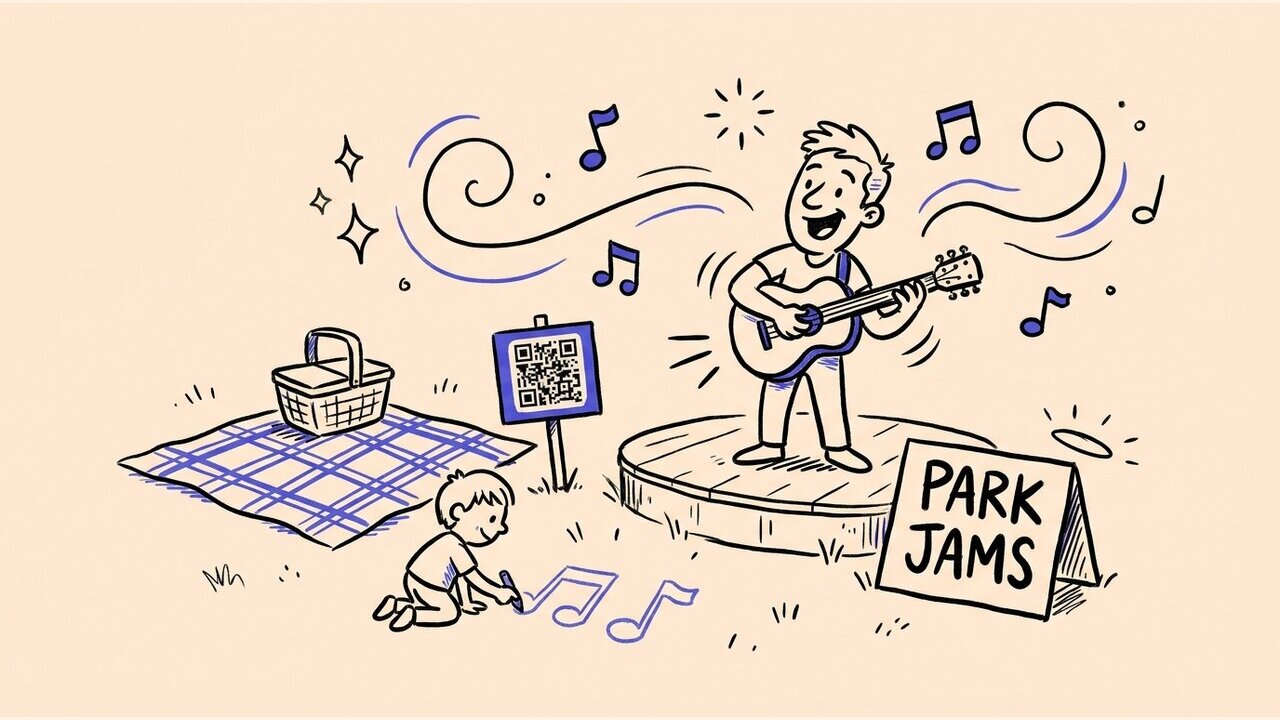
Short answer: A great Concerts in the Park event works when music is the anchor, not the whole plan. Build zones, add simple activities before and between sets, make food easy to bring or buy, and design the layout so kids, teens, adults, seniors, and guests with disabilities can participate comfortably.
- Start with city rules: Check park reservations, amplified sound, vendors, alcohol, tents, power, insurance, restrooms, trash, and accessibility before promotion.
- Build zones: Create areas for listening, picnics, kids, quiet breaks, food, dancing, accessibility, and photos.
- Feed people two ways: Offer packable picnic ideas for guests and low-mess vendor options for people who arrive empty-handed.
- Make set breaks useful: Add short activities like trivia, dance lessons, chalk art, and opt-in photo prompts.
- Collect the memories: Use one QR code so neighbors can share photos without chasing texts afterward.
Who this is for (and not for)
This guide is for neighborhood associations, parks foundations, local arts groups, nonprofit volunteers, and small towns planning a free or low-cost summer music night for mixed ages.
It is not a replacement for your city permit process, county health department rules, ADA coordinator, insurance provider, or parks department. Local rules vary widely in 2026, especially for food vendors, alcohol, generators, tents, stages, drones, raffles, and outdoor movies.
1. Plan the event like a mini village, not one big lawn
Make Concerts in the Park fun for everyone by thinking in zones:
- Listening lawn: Blankets and chairs facing the stage
- Accessible viewing area: Firm path access, companion seating, and a clear sightline
- Picnic row: Space for blankets, coolers, strollers, and wagons
- Kids activity corner: Chalk, bubbles, rhythm games, and a craft table
- Teen hangout edge: Lawn games, local dessert vendor, and photo prompts
- Quiet shade area: A lower-stimulation spot away from speakers
- Food lane: Vendors, water, trash, and hand-cleaning options
- Info table: Schedules, lost-child process, volunteer contact, and weather updates
This structure helps guests self-select and helps volunteers answer questions quickly. For a similar neighborhood music format, see our guide on how to plan a Porchfest .
2. Make the first 30 minutes count
People often arrive before the music starts, then stand around wondering what to do. Use that window on purpose:
- Picnic setup contest: Coziest blanket, best reusable setup, or most colorful snack board.
- Local music bingo: Squares like “guitar solo,” “kid dancing,” and “song you know.”
- Sidewalk chalk path: Ask kids and adults to draw music notes near the entrance.
- Community request wall: Let people suggest bands, vendors, or themes for next time.
Keep these activities short and optional. They should break the ice, not compete with the band.
3. Add activities for five energy levels
Use an activity ladder so every guest has an option.
| Energy level | Activity ideas |
|---|---|
| Sit and listen | Printed song notes, local history cards, picnic blanket area |
| Light participation | Music bingo, voting for next year’s theme, vendor passport |
| Creative | Chalk art, friendship bracelet table, decorate a paper fan |
| Movement | Line dancing, hula hoops, lawn games, seated rhythm claps |
| Community challenge | Photo scavenger hunt, canned food drive, volunteer thank-you moment |
For kids, choose activities that do not need long instructions. For teens, offer independence. For seniors and guests with mobility needs, make participation possible from a chair.
4. Pack picnic food that survives the park
Many guests want to bring dinner, so share food ideas in your event reminder.
Easy pack-and-take ideas:
- Wraps, pinwheel sandwiches, or bagel sandwiches
- Pasta salad in small containers
- Cut fruit, grapes, berries, or watermelon sticks
- Chips, crackers, hummus cups, salsa, and guacamole cups
- Trail mix, granola bars, popcorn, or pretzels
- Cookies, brownies, rice treats, or mini cupcakes
- Sparkling water, lemonade, iced tea, and refillable bottles
For food safety, remind guests to keep cold foods at 40°F or below and hot foods at 140°F or above. Perishable foods should not sit out longer than 2 hours, or 1 hour when outdoor temperatures are above 90°F. Pack drinks and perishables in separate coolers when possible.
If you want a lower-effort outdoor format for smaller groups, our park picnic ideas guide has a simple bring-one-thing plan.
5. Choose vendors that are easy to eat on a blanket
Vendors can make the event feel fuller, but they need to fit the park setting. Prioritize speed, tidy portions, and choices for different diets.
Good vendor options include:
- Tacos, empanadas, dumplings, or hand pies
- Pizza slices or flatbreads
- Hot dogs, veggie dogs, and kid-size portions
- Kettle corn, soft pretzels, shaved ice, or ice cream
- Lemonade, coffee, aguas frescas, mocktails, and bottled water
- A local bakery table with clearly labeled allergens
Ask vendors to label common allergens and offer at least one vegetarian option. Food vendors usually need local approval or permits. Some places also require a site map, handwashing setup, fire review, or proof that food is prepared in an approved kitchen. If alcohol is on the table, confirm licensing, fencing, ID checks, insurance, security, and open-container rules before mentioning it publicly.
6. Turn set breaks into community moments
Set breaks are where attention disappears. Give each break one small job:
- Five-minute line dance lesson: Include a seated version for anyone who wants to join from a chair.
- Local trivia: Ask questions about the park, town history, or past concert memories.
- Kids rhythm parade: Give children egg shakers or paper tambourines and walk a tiny loop away from the stage cables.
- Community shout-outs: Thank parks staff, sponsors, volunteers, and nearby residents who make the night possible.
If you add an outdoor movie, check public performance rights first. A home streaming subscription does not usually cover a public park screening.
7. Make accessibility visible before guests arrive
Accessibility is the confidence that someone can plan their night before leaving home.
Publish practical details in advance:
- Accessible parking and drop-off locations
- Terrain notes, such as grass, gravel, pavement, slopes, or mats
- Restroom locations and accessible restroom routes
- Quiet area location
- Whether seating is provided or guests should bring chairs
- How to request accommodations
- Weather or cancellation communication channels
On site, use large, high-contrast signs and keep paths clear. Place accessible portable restrooms on level ground connected to an accessible route. Service animals are generally allowed where attendees can go, even if pets are not.
8. Add a no-pressure photo scavenger hunt
A photo scavenger hunt gives families and friend groups something to do without taking over the concert. Keep prompts focused on scenes and objects, not strangers.
Try prompts like:
- Best picnic setup
- Favorite lawn chair
- A colorful snack
- Sunset over the stage
- Dancing feet
- A local vendor find
- Chalk art you loved
- The encore mood
Gather Shot is a photo sharing platform for events. For Concerts in the Park, guests can scan one QR code and upload photos or videos from their browser, with no app download required. Organizers can review uploads before they appear publicly, use Interactive Scavenger Hunts for prompts, and download the collection later.
For broader planning around shared galleries, see our party photo sharing guide .
Frequently asked questions
Do you need a permit for a Concerts in the Park event? Often, yes, but rules vary. Check park reservations, amplified sound, expected attendance, vendors, alcohol, tents, stages, power, insurance, bathrooms, trash, and traffic requirements with your local agencies.
What food should people pack for an outdoor concert? Pack low-mess foods like wraps, fruit, chips, pasta salad, cookies, and sealed drinks. Keep perishable foods cold, use ice packs, and throw food out if it sits too long in warm weather.
How do you make a park concert fun for kids and adults? Offer optional zones: chalk and bubbles for kids, lawn games for teens, picnic space for families, dancing for active guests, and quiet shade for people who need a break.
Can vendors sell food or drinks at a public park concert? Usually only with local approval. Food trucks, alcohol, sampling, cooking equipment, tents, and generators may require permits, inspections, or fire review.
Summary and next steps
A Concerts in the Park event becomes memorable when people can eat, move, rest, participate, and share the night in their own way. Start with local rules, design clear zones, give every age group a low-pressure activity, and create a shared photo hub before you print signs.
Written by
Gather Shot TeamThe Gather Shot team writes guides, planning resources, and product updates that help event hosts and photographers collect guest photos without asking anyone to download an app.
Related articles
More practical guides selected from the same event photo sharing topics.
U.S. Open Tennis Party: Food, Drinks, Decor & Games
Plan a U.S. Open tennis party with Honey Deuce drinks, a mocktail recipe, easy food, games, themes, decorations, invitation tips, and a host timeline.
Aug 19·13 min read
Halloween Photo Scavenger Hunt: 30 Prompts
Plan a Halloween photo scavenger hunt with 30 prompts for parties, offices, and neighborhoods, plus setup, safety, team formats, awards, and QR sharing.
Aug 17·13 min read
How to Plan a Trunk or Treat: Ideas and Checklist
Learn how to plan a trunk or treat with an easy timeline, volunteer roles, creative themes, games, photo ideas, and practical day-of checklists.
Aug 17·12 min read