How to Plan a Charity Golf Tournament That Raises Real Money
A practical planning guide for charity golf tournaments. Covers budgeting, sponsorships, day-of fundraising, and post-event follow-up that most guides skip.
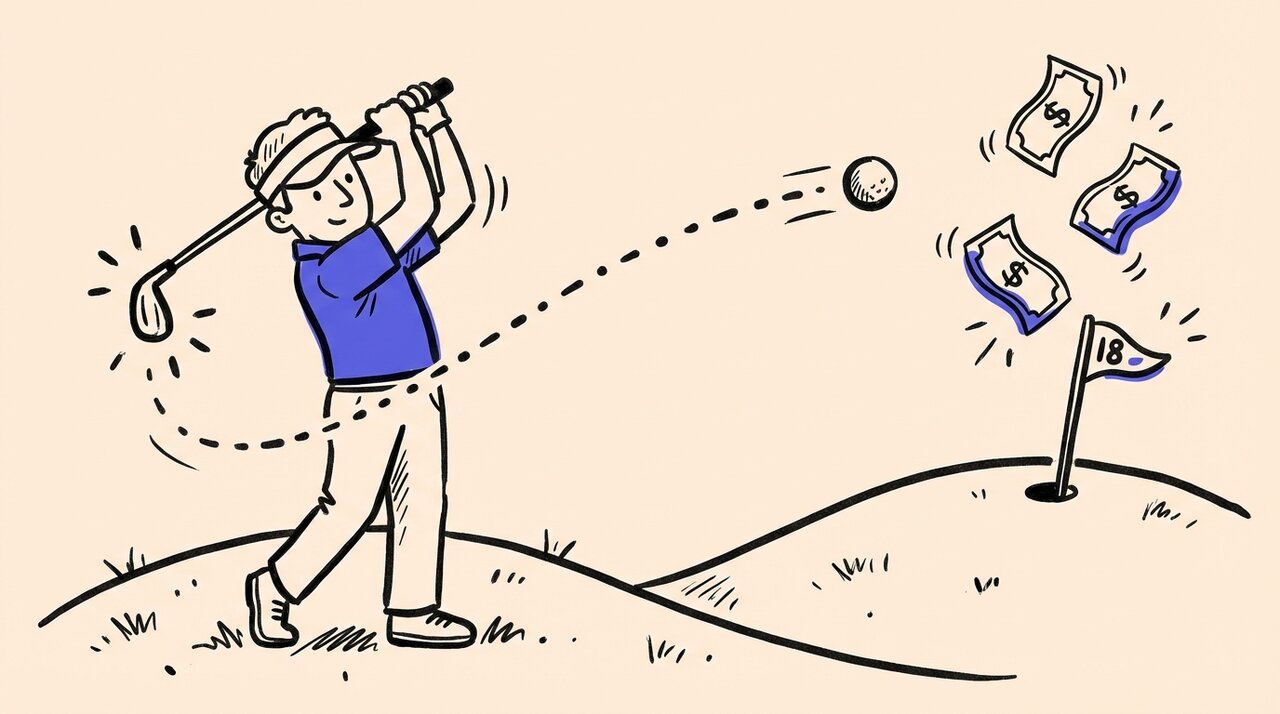
Short answer: A charity golf tournament that raises real money is won in three places: sponsorship sales before the event, cashless fundraising during the round, and fast content follow-up afterward. Start planning 9 to 12 months out, run a 4-person scramble, and build your budget so sponsorships cover hard costs while golfer fees generate net proceeds.
- Lock in your course and format first, then build a sponsorship deck before selling golfer spots
- Price sponsorships with clear, specific deliverables, not vague “recognition”
- Bundle mulligans, raffle tickets, and contests into a pre-sold player package
- Capture photos from golfers, volunteers, and sponsors for post-event recaps
- Follow up within one week with results, photos, and thank-yous
Who this is for (and not for)
This guide is for:
- Nonprofit staff planning a first or second-year charity golf tournament
- Board members chairing a tournament committee
- Volunteer organizers who want to run a tighter, more profitable event
- Corporate social responsibility teams hosting golf outings for a cause
This is not for:
- Professional tournament directors running PGA-sanctioned events
- Casual golf outings with no fundraising component
- Organizations with fewer than 50 expected golfers (consider a smaller format like a 9-hole social or simulator event instead)
Start 9 to 12 months out and work the timeline backward
Most charity golf tournaments fail to reach their potential because organizers start too late. Sponsorship sales need lead time. Course availability narrows fast during peak season. Auction items take months to secure.
Here is a realistic planning timeline:
9 to 12 months out: Book the course. Nail down format (4-person scramble, every time). Set your fundraising goal and budget. Build a 3-person core committee: sponsorship lead, operations lead, and day-of coordinator.
6 to 8 months out: Start sponsorship outreach before golfer registration. Sponsors commit more easily when they are not competing with a half-full field. Open a landing page.
4 to 5 months out: Open public registration. Order signage, trophies, and swag. Confirm your photographer or content plan. Start collecting auction and raffle items.
30 days out: Lock catering counts. Finalize pairings and cart assignments. Send golfer instructions covering arrival time, dress code, weather policy, and parking.
Week of: Print hole signs, scripts, and volunteer sheets. Pack check-in kits, contest materials, and QR codes for donations and photo sharing.
A first-year charity golf tournament should keep things simple: one course, one shotgun start, one format, one reception.
Build your budget so sponsorships cover hard costs
The math behind a profitable charity golf tournament is straightforward: sponsorship revenue should cover your hard costs. Golfer entry fees and day-of fundraising become your net proceeds.
Typical hard costs per golfer at a mid-market charity golf tournament:
- Course, greens fees, and carts: $75 to $185
- Food and non-alcoholic beverages: $25 to $60
- Swag or player gift: $10 to $50
- Prizes and trophies: $10 to $40
- Scoring platform and payment processing: $5 to $20
For a 100-golfer event on a public or semi-private course, expect total hard costs between $15,000 and $30,000.
What organizers underestimate: food and beverage service charges, credit card processing fees (3% or more), and volunteer expenses.
Set your golfer pricing after you know your costs. Community events typically charge $175 to $250 per player or $700 to $1,000 per foursome.
Here is what the math looks like for a 100-golfer charity golf tournament on a mid-market course:
| Revenue source | Amount |
|---|---|
| Golfer fees (100 players × $200) | $20,000 |
| Title sponsor | $15,000 |
| 4 Gold sponsors × $5,000 | $20,000 |
| 10 Hole sponsors × $750 | $7,500 |
| Pre-sold player packages (80 players × $75) | $6,000 |
| Raffle, auction, and on-course contests | $4,000 |
| Mission appeal/paddle raise | $3,000 |
| Total revenue | $75,500 |
| Expense | Amount |
|---|---|
| Course, carts, and range ($130/golfer) | $13,000 |
| Food and beverage with service charges ($50/golfer) | $5,000 |
| Signage, printing, and trophies | $2,500 |
| Swag bags ($25/golfer) | $2,500 |
| Insurance and permits | $1,000 |
| Scoring platform and payment processing | $1,500 |
| Photographer | $1,000 |
| Volunteer meals and supplies | $500 |
| Total expenses | $27,000 |
Net proceeds: $48,500. The key: sponsorship revenue ($42,500) covers all hard costs ($27,000) with room to spare. Every dollar from golfer fees, player packages, and day-of fundraising flows straight to your cause.
Sell sponsorships with specific deliverables, not vague promises
Sponsors in 2026 want client hospitality, audience fit, digital exposure, and proof of value. Build 3 to 5 simple tiers. Here is a structure that works for a charity golf tournament:
Title or presenting sponsor ($10,000 to $25,000): Name in the event title, logo on all signage and digital assets, a premium foursome, a speaking slot at dinner, and a post-event recap with photos and attendance data.
Gold or platinum ($2,500 to $7,500): Logo on the leaderboard and event site, a foursome, a sponsored hole or contest, and inclusion in post-event communications.
Hole sponsor ($300 to $1,500): Signage at their hole, the option to set up a table or tent, and a social media mention.
What closes sponsors faster: exact deliverables. “Your logo on the live leaderboard, two social media posts, and a post-event email recap sent to 200 attendees” is a specific, measurable package. “Gold-level recognition” is not. Offer returning sponsors first right of refusal for next year.
Make day-of fundraising cashless and frictionless
Entry fees and sponsorships set the floor. Day-of fundraising lifts the ceiling. The key is removing friction so golfers can spend without stopping play.
The most effective tactic in 2026: a pre-sold player package. Bundle mulligans, raffle tickets, and a putting contest entry into a $50 to $100 add-on at registration. Golfers buy once, pick up their package at check-in, and play without pulling out their wallets on every hole.
Other high-return tactics:
- A mission appeal or paddle raise during the reception, where a board member tells a short story and asks for donations. This often raises more than a silent auction.
- Hole-in-one contests with insured prizes. Coverage for a $25,000 cash prize typically costs $300 to $600 for 100 golfers.
- QR codes on carts and at the reception linking to a mobile donation page. Cashless giving is now standard at any charity golf tournament.
What to skip: too many small cash games scattered across holes. They slow pace of play and rarely generate meaningful revenue.
Capture content that fuels next year’s event
The single biggest missed opportunity at charity golf tournaments is content. Dozens of golfers, sponsors, and volunteers take photos all day on their phones, and almost none of those photos make it back to the organizer.
Hire one photographer to cover key moments: check-in, the first tee, sponsor activations, contest winners, and the awards ceremony. But one photographer cannot cover 18 holes and 100 golfers simultaneously.
Fill the gap with crowdsourced photo sharing. Place QR codes at check-in, on golf carts, and at the reception so golfers and volunteers can upload their own photos. Gather Shot is a photo sharing platform for events that handles this without requiring anyone to download an app. Guests scan a QR code, upload from their browser, and photos land in one organized collection.
Gather Shot’s moderation tools let you review and approve uploads before sharing them, so you control what goes public. For events that want interactive engagement, Gather Shot’s photo scavenger hunt feature works well on the course. Set up challenges like “best cart selfie” or “team photo at the signature hole” to encourage uploads throughout the round.
Keep the reception short and the follow-up fast
After five hours on a golf course, no one wants a 90-minute dinner program. Keep awards under 30 minutes. Announce contest winners, recognize top sponsors, share one mission story, run your donation ask, and close.
Practical reception tips:
- Serve food as golfers finish, not after everyone is seated. Buffet lines move faster than plated service.
- Display a live slideshow of the day’s photos on a screen near the bar. If you collected photos with Gather Shot throughout the round, you already have content ready to display.
- Keep speeches to three or fewer. One from the host, one mission moment, one sponsor thank-you.
Post-event follow-up is where most charity golf tournaments lose momentum. Send a thank-you email within 48 hours with top-line results and a few standout photos. Sponsors should receive a dedicated recap within one week that includes photos of their activation. A fast, photo-rich follow-up is also your best sales pitch for next year’s sponsorships.
Frequently asked questions
What golf format works best for a charity golf tournament? A 4-person scramble. It is the fastest format, the friendliest for mixed skill levels, and the easiest to score.
How many golfers do I need to make a charity golf tournament worthwhile? Most mid-market events target 72 to 144 golfers (18 to 36 foursomes). Below 50, consider a smaller format. Fixed costs stay the same regardless of field size.
Do I need special insurance for a charity golf tournament? Yes. Get a special event general liability policy and provide a certificate of additional insured to the course. If alcohol is served, add host liquor liability. For hole-in-one prizes, purchase prize indemnity insurance.
Are raffles legal at charity golf tournaments? Regulations vary by state. Many states require a license or registration for charitable raffles. Check your state’s requirements before printing tickets.
How do I get golfers to actually upload their photos? Put QR codes where golfers naturally pause: check-in tables, golf carts, the scoring tent, and the bar. Have the emcee mention the photo gallery once during announcements. Gather Shot does not require an app download, which removes the biggest participation barrier.
What is a realistic fundraising goal for a first-year charity golf tournament? For a 100-golfer event with moderate sponsorship support, $20,000 to $40,000 in net revenue is a strong first-year result.
Summary and next steps
A charity golf tournament that raises real money requires planning in three phases: sell sponsorships early to cover hard costs, run cashless fundraising during the event, and follow up fast with photos and results to retain sponsors for next year. Start with the timeline in this guide and build your committee, budget, and sponsorship deck in that order.
For more on collecting event photos at nonprofit events, check out our fundraiser photo sharing guide .
Written by
Gather Shot TeamThe Gather Shot team writes guides, planning resources, and product updates that help event hosts and photographers collect guest photos without asking anyone to download an app.
Related articles
Top Tools for Branded UGC at Events
Compare 4 tools for branded UGC at events in 2026. Learn when to use direct upload, social capture, or booth content for brand-safe reuse after the event.
Apr 1, 2026·7 min read
The Best Way to Host an Event and Collect RSVPs
Learn the easiest way to host an event and collect RSVPs with Mixily, a free ad-free RSVP platform. Plus tips for collecting event photos with Gather Shot.
Mar 31, 2026·8 min read
Sponsor Activations That Work at B2B Conferences
Six B2B conference sponsor activations that attendees find useful, not gimmicky. Includes a planning checklist, ROI benchmarks, and photo sharing tips.
Mar 30, 2026·15 min read