Sales Kickoff Team-Building Activities: A 45-Minute Photo Challenge Session
Run sales kickoff team-building activities in 45 minutes with three fictional customer challenges, a timed host script and seated options. Copy the session.
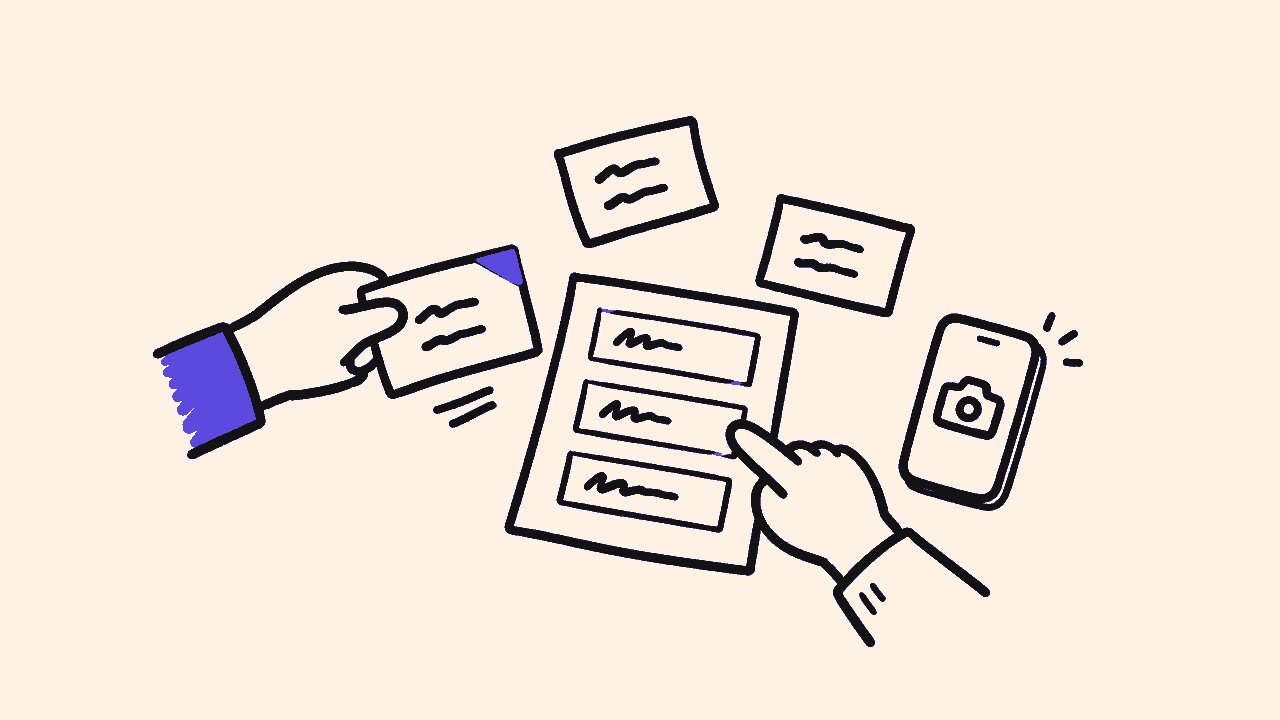
Short answer: For sales kickoff team-building activities with a practical purpose, give mixed-role teams three fictional customer decisions to solve and photograph at their tables. This 45-minute session includes instructions, three seven-minute challenges, transitions and a debrief, with no acting, room race or software purchase required.
- Photograph decision cards, not colleagues or customer records.
- Give each teammate information the group needs before choosing an answer.
- Keep everyone seated and rotate the task, not the people.
- Review one corrected assumption rather than awarding a winning pitch.
For a January 2027 kickoff, use this sales kickoff photo challenge between content-heavy sessions. The photographs preserve what teams decided so they can inspect and revise it. They are not evidence of sales competence.
These are original exercise designs from Gather Shot, a photo sharing platform for events, not participant-tested sessions. The time allocations total 45 minutes. Desk checks covered arithmetic, fact coverage and sample answers, not participant completion times. Pilot the instructions, materials and review process before use.
Who this is for (and not for)
This session gives salespeople and adjacent roles a small, shared problem to work through without asking them to perform for executives.
Use it for:
- Enablement teams practicing how to separate customer facts from assumptions.
- Revenue operations teams making next steps and ownership more explicit.
- Internal event organizers filling one 45-minute participation block.
- Mixed groups of account executives, sales development, solutions engineering and customer success colleagues.
Do not use it for:
- Individual certification, performance ranking or evaluating new hires.
- Repairing serious conflict between departments through a surprise game.
- Discussing live opportunities, customer complaints or confidential forecasts.
Start with a proposed room size of 12 to 40 people in teams of three to five. This is a planning boundary, not a tested capacity claim. Mix functions where possible, but do not make one customer success colleague represent the entire department. Managers participate as peers and speak after other contributors.
Offer an observer role or a quiet alternative: privately annotate a scenario and optionally share one written observation. No explanation is required. An all-observer table can leave every station “not attempted.” For the surrounding day, use the sales kickoff agenda template . For a social activity without sales practice, use the office photo scavenger hunt .
What these sales kickoff team-building activities practice
The practice is asking, “What do we know, what remains uncertain, and who needs to confirm the next step?” That is narrower than recreating a customer story or delivering an improvised pitch.
Salesforce’s discovery guidance emphasizes understanding a prospect’s current situation, desired outcome and resources. Its SKO planning guidance also includes roles outside sales. Those are useful practitioner recommendations, not evidence that mixing job titles automatically improves collaboration.
A meta-analysis of hidden-information group tasks found that groups discussed more common information than information held by individual members. Information pooling related to decision quality, with several factors affecting the results. That motivates a rule here: hear every fact before proposing a solution. It does not prove this exercise will change sales results.
Competition is optional in team building, not a requirement of working in sales. Mollick and Rothbard’s Mandatory Fun working paper found that imposed games could reduce positive feelings when employees did not consent to the game. This session therefore uses no leaderboard, speed points or compulsory presentation.
Finally, research on debriefs supports reviewing experience but finds that effectiveness depends on interacting design choices and context. Keep the debrief. Do not convert findings from other settings into a promised revenue lift.
Prepare the room and follow the 45-minute schedule
Set up before the clock starts
For each station at each table, prepare one shared scenario/instruction sheet and three separately cut fact slips. Add three blank answer sheets, pens and a table ID such as T04. The editable host pack labels what to print and cut. Keep its review sheet covered until minute 31.
Assign a lead facilitator/timekeeper. At each table, assign three fact holders, a recorder and a checker, with jobs overlapping as needed. Photography is optional, and anyone can decline a job. Pre-seat teams with envelopes A, B and C. Nobody queues at a shared station or crosses the room.
Send accessible text, including all facts, in advance when needed. Separate fact distribution is optional when access needs favor shared text. Allow typing, dictation and a supporting reader or scribe.
W3C’s accessible events guidance recommends adaptable materials and descriptions of visual information. Read answers aloud or provide their text. Pilot accommodations within the schedule, rather than squeezing them into capture time.
Follow this run of show
| Elapsed time | Host cue and team task |
|---|---|
| 00:00 to 05:00 | Explain purpose, privacy, participation choices and the output. |
| 05:00 to 08:00 | Assign table jobs. Practice photographing a sheet marked “T04 TEST,” or showing a paper answer. |
| 08:00 to 15:00 | Station A: separate an enthusiastic sponsor from a confirmed decision. |
| 15:00 to 16:00 | Put A aside, open B, change reader and checker. Stay seated. |
| 16:00 to 23:00 | Station B: replace an unsupported promise with a bounded next step. |
| 23:00 to 24:00 | Put B aside, open C, change reader and checker. Stay seated. |
| 24:00 to 31:00 | Station C: make a handoff usable to its receiver. |
| 31:00 to 35:00 | Reveal review sheets. Tables self-check and correct one omission. Host samples answers. |
| 35:00 to 43:00 | Debrief at tables, then hear two voluntary examples. |
| 43:00 to 45:00 | Write one follow-up action. Explain photo retention and close. |
Opening script:
We are practicing how different roles build a decision together. These customers are fictional. Hear all three facts before solving.
Photograph only your answer sheet, with no faces, badges or work screens. You can write, read, check, observe or pass. We are not ranking anyone. Paper answers count, and uploads must not delay the next round.
For remote participation, use the same text cards and an accessible shared document. A screenshot of the answer can replace a photo, but text alone counts equally. Keep remote teams together with a remote host following the same clock. Rehearse breakout-room entry beforehand. Do not attach one remote participant to a noisy table without usable audio and someone monitoring their contributions.
Copy these three original station cards
Every station lasts seven minutes. Use the first minute for silent reading, the next two for sharing all three facts, two for deciding and writing, one for a checker to challenge the answer, and the final minute for capture. Upload only if it finishes within that final minute. Otherwise keep the photo locally or hand in the paper.
Assign one fact slip each to three people. With four or five teammates, the others record or check. With fewer active participants, combine slips so no fact disappears.
Anyone may read their slip aloud, show it or ask someone else to read it. After sharing, lay all facts where everyone can access them. This is not a memory test.
Write the table ID and station letter on every answer. Use three labeled boxes with short sentences. The photographer is a table job, not the owner of the answer. All customers and details below are fictional. Assume today is January 5, 2027 in every scenario, regardless of your actual kickoff date.
Station A: The missing decision
Customer situation: Alder Services wants to replace its scheduling software. The operations director says, “If the demo goes well, we can move quickly.” Your team must choose the next conversation, not predict a close date.
Give these facts to separate teammates:
- Commercial fact: The operations director wants a decision this month. The finance director signs purchases and has not attended a meeting.
- Technical fact: A demo can show the scheduling workflow. The connection to the customer’s payroll system has not been assessed.
- Adoption fact: Supervisors cannot attend training during the next four weeks. The director’s preferred launch date falls inside that period.
Photo challenge: Make a three-box “decision checkpoint.” Label the boxes Known, Not yet known and Next conversation. Include one confirmed fact, two unresolved dependencies, and a question with a named role who can answer it.
Check before capture: Does “the director likes it” accidentally become “the purchase and launch are approved”? There is no evidence for that jump. A useful next conversation might ask finance about the approval process or supervisors about a workable training window. More than one answer can be defensible.
Station B: The promise boundary
Customer situation: Beacon Distribution asks, “Can all eight branches go live on February 1?” You are discussing fictional RouteDesk software, not Gather Shot. The customer wants a firm answer today.
Distribute these facts:
- Commercial fact: February 1 is the customer’s requested date. Your company has not committed to it.
- Technical fact: RouteDesk supports comma-separated values (CSV) files, a spreadsheet export format. A direct connection to the customer’s legacy system is unverified.
- Delivery fact: The delivery team can provision a two-branch pilot by February 1 only if it receives a validated CSV by January 20. Eight-branch rollout timing is unassessed.
Photo challenge: Make a “promise boundary” card with boxes labeled Confirmed capability, Condition and Next commitment. Write what you can say now and a next step you can own without promising the eight-branch launch.
Check before capture: “We can do February 1” drops both the branch limit and the data condition. “We’ll try” avoids a promise but gives nobody a useful action. Name a role to arrange CSV validation and a date to report its outcome, explicitly as a proposed next step rather than an agreed customer commitment.
Station C: The receiving-team test
Customer situation: Cedar Fieldworks has signed for a pilot. Sales is preparing to hand the project to customer success. A signed order is not the same as an agreed success measure.
Distribute these facts:
- Sales fact: The customer wants fewer missed service visits. Nobody has recorded the current number or a target.
- Delivery fact: A pilot covers one branch. Expansion to the other branches requires a separate review.
- Customer-success fact: The customer coordinator can attend a kickoff on January 12. The branch manager must confirm the success measure and has not accepted the invitation.
Photo challenge: Create a handoff receipt with boxes labeled Outcome and gap, Scope boundary and Owner and confirmation. Record the missing measurement, the pilot limit, and who will obtain which confirmation by a proposed date.
Check before capture: Ask a teammate who did not write the card to use only its words to answer, “What do I do next, and what must I not assume?” If they need an oral rescue, revise the card. Do not invent a baseline, silently include all branches or claim the branch manager has agreed.
Review decisions without turning them into a contest
At minute 31, tables uncover the pack’s review sheet and complete their own log: Table ID, A check, B check, C check and Correction to revisit. Mark each station “ready,” “revise” or “not attempted.” These are self-review labels, not facilitator certification or employee records. The host answers questions and samples responses, not every card.
| Station | Minimum answer check |
|---|---|
| A | One fact, two unresolved dependencies, and a question for a role who can answer it. Interest is not approval. |
| B | CSV capability, two-branch limit, validated CSV by January 20, and an owned next action with a proposed date. Eight-branch timing remains unknown. |
| C | Missing baseline and target, one-branch limit, and an internal owner/action/proposed date. Manager attendance and success-measure confirmation remain pending. Coordinator availability does not confirm the whole kickoff. |
Correct one card on paper or in shared text. For example, restore “two branches” to an overbroad promise. Recapturing corrected cards is optional and happens after the session, with permission. A plain text answer counts equally.
Protect the eight-minute debrief:
- Minutes 35 to 37: Silently choose one assumption your team changed.
- Minutes 37 to 41: Discuss which fact changed it and which role needs that information in ordinary work.
- Minutes 41 to 43: Hear two willing tables for at most one minute each. Invite volunteers during table discussion. Read a written response instead only with permission.
Ask, “Which fact would have disappeared if we had started with a pitch?” Then ask, “What wording made the next step usable to its receiver?” Avoid naming a department as the source of mistakes.
During the closing two minutes, each table writes one process habit to try and a volunteer owner. For example: “At our next internal handoff review, check whether the receiving role can identify the next action.” Do not collect confidential examples in the photo gallery afterward.
How Gather Shot fits into this
Gather Shot is a photo sharing platform for events. Its interactive scavenger hunts can hold three prompts and collect prompt-linked photo or video submissions through a browser. For this exercise, use still photos of the answer cards. Video adds review work without helping the decision check.
| Collection method | What the facilitator handles |
|---|---|
| Paper, with an optional phone camera | Keep cards at tables, inspect locally and collect only agreed copies. No purchase or internet required. |
| Your organization’s approved shared document | Provide accessible text answers, manage permissions and keep each table’s work separate. |
| Gather Shot prompts | Create A, B and C prompts, ask one willing person per table to submit, and identify the table inside each photo. |
Gather Shot tracks personal prompt completion, not team scores. It does not provide automated team scoring or leaderboards. Tables keep their review logs separately. One teammate’s completion indicator does not measure everyone else’s participation.
Before sharing the upload link, disable Public Gallery and turn off automatic approval for this session. Both default on. Test a guest upload and confirm it stays pending and the shared gallery is unavailable. Guests can still see their own pending uploads.
Do not run a live slideshow. These controls do not make the gallery a place for confidential customer information.
Hunts are included in Pro and the free trial, with an optional add-on for Basic. Check current plans before January. Budget three photos per table, plus tests and retakes. Eight tables need 24 station photos. Thirteen tables need 39, or 52 with one test upload each.
The trial includes 50 unlocked uploads, with extra uploads locked until you buy enough capacity. Uploads require internet. Do not assume automatic offline syncing.
Use the company events workflow and corporate event photography guide for wider kickoff collection. Do not automatically reuse workshop photos for public marketing. Assign an organizer to explain and carry out retention across paper, phone copies, shared documents and Gather Shot. Removing a gallery copy does not remove local copies.
Frequently asked questions
Can we run this sales kickoff session without buying software?
Yes. Print the cards, use pens and review paper answers at the tables. A phone camera preserves each decision if the team wants a copy. The session does not depend on uploads, a projector or a paid facilitator.
What if everyone has the same sales role?
Distribute the three different fact slips anyway. Ask teammates to reason from the supplied facts rather than pretend to be engineers or implementation experts. Invite adjacent-role colleagues to review the scenarios before the event if you adapt them to your business.
What if someone does not want to take or appear in photos?
No faces are needed. Writing, reading, checking and observing are valid choices, and text-only or paper-only answers count equally. Offer a quiet alternative to the whole activity. Do not describe someone who declines as disengaged.
Can this work for 100 people or in a theater-style room?
Do not assume the small-room plan scales unchanged. Provide usable writing surfaces and duplicate materials, divide the audience into facilitated zones, and pilot the revised logistics. Keep two whole-room examples rather than adding a presentation from every table. If tables and accessible participation cannot be arranged, choose another format.
Summary and next steps
These sales kickoff team-building activities produce three inspectable decisions: a checkpoint, a bounded promise and a usable handoff. The useful moment is a correction made after hearing another person’s fact, not a fast upload or a polished photograph.
Before January 2027, run a small pilot with colleagues from different functions. Time the reading, fact-sharing, writing and capture separately. Ask whether participants understood the task, could contribute without performing, and had enough time to challenge an answer. If the pilot overruns, shorten the writing requirements or remove a station and reallocate its time. Do not quietly take the time from the debrief.
Download the host pack , appoint a facilitator and decide on your collection method. If prompt-linked photos would help, review Gather Shot’s hunt setup and test three prompts before inviting attendees. Otherwise, use paper. In either case, retain the fictional-data rule and follow up on the process habit each table chose, without treating completion as proof of improved sales performance.
Written by
Gather Shot TeamThe Gather Shot team writes guides, planning resources, and product updates that help event hosts and photographers collect guest photos without asking anyone to download an app.
Related articles
More practical guides selected from the same event photo sharing topics.
Hundreds of Uploads, One Company Photo Hunt
A company photo hunt collected hundreds of uploads across several dozen challenges. See how prompt-based collection works and get ideas for your next offsite.
Oct 20 · 3 min read
Office Photo Scavenger Hunt: 15 Team Prompts
Plan an office photo scavenger hunt with 15 inclusive prompts, a timed agenda, seated alternatives and manual scoring. Copy the rules for your next offsite.
Oct 20 · 9 min read
Halloween Photo Scavenger Hunt: 30 Prompts
Plan a Halloween photo scavenger hunt with 30 prompts for parties, offices, and neighborhoods, plus setup, safety, team formats, awards, and QR sharing.
Aug 17 · 14 min read