Church Fall Festival Ideas: Games, Booths, and Planning
Use these church fall festival ideas, a planning timeline, and an all-ages activity lineup to welcome families without exhausting your volunteer team.
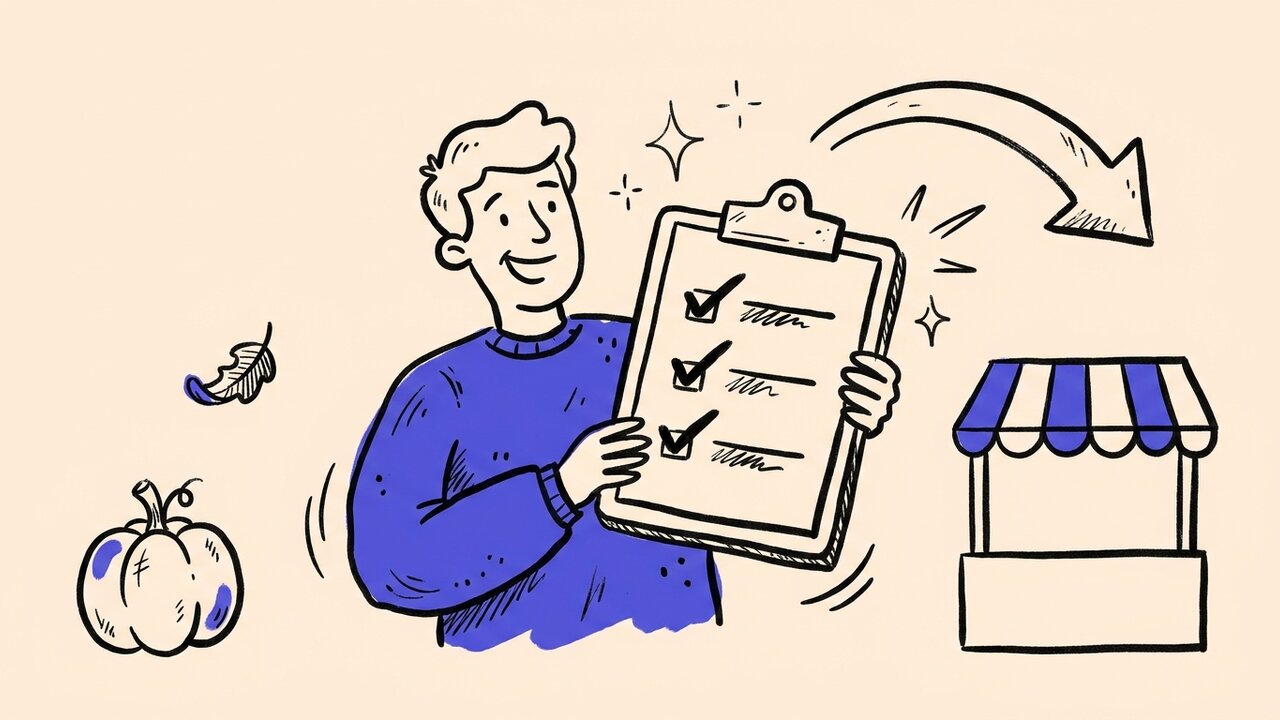
Short answer: Plan a church fall festival around one purpose, a firm complexity limit, and a small set of repeatable activities. Give every station a captain, relief coverage, an inclusive way to participate, and a weather fallback. Set supervision and child-photo rules before promoting the event or its QR code.
- Choose fellowship, outreach, or fundraising as the primary purpose
- Select activities by participation style, noise, queue, and volunteer load
- Give every station a captain, relief person, and handoff method
- Map the guest journey from parking and welcome through food, rest, and departure
- Name the people authorized to make weather, safety, and photo decisions
The most useful church fall festival ideas help a committee protect its capacity while making room for children, teens, adults, and older guests. This guide builds one workable event for roughly 75 to 500 attendees, not a carnival wish list that leaves five volunteers doing everything.
Who this plan is for, and what format can your team sustain?
This checklist works best for:
- Church staff, ministry leaders, and volunteer committees planning for roughly 75 to 500 attendees
- Mixed-age fellowship or community-welcome events where the church applies its established safeguarding, incident, and supervision policies
- Teams willing to cap complexity, assign captains, and give volunteers defined relief
Use a different planning process for:
- Drop-off childcare or programming that changes the church’s supervision responsibilities
- Rides, animals, open flames, extensive vendors, or public-road traffic control
- A ticketed production with complex financial, security, or crowd-management needs
Those elements can trigger specialized staffing, venue, insurer, permit, or local requirements. A smaller event can still be complex, while a 500-person booth loop can remain manageable when every element repeats cleanly. State who supervises children in event information, and have the church confirm that arrangement against its own approved policies.
Choose one primary purpose:
- Fellowship: Use a post-service meal with a compact activity loop. Assign owners for food, seating, activities, and cleanup.
- Outreach: Use a free campus open house or neighborhood harvest festival. Assign owners for parking, welcome, boundaries, and newcomer information.
- Fundraising: Use a ticketed meal or clearly separated donation activity. Assign owners for payments, accounting, sponsors, and donor follow-up.
Write the purpose in one sentence, then cut any attraction that does not support it. If your team wants a simpler meal-first event, use these church picnic ideas . If fundraising drives the event, review the workflow for nonprofit fundraisers .
Use this church fall festival planning timeline
Start 8 to 10 weeks ahead for a modest event. Start earlier when approvals, vendors, permits, insurance review, or specialized safeguarding require it. The best church fall festival planning documents fit in one shared packet.
8 to 10 weeks before
Set the purpose, attendance range, budget limit, hours, location, and indoor fallback. Assign an event lead plus captains for welcome and parking, food, activities, volunteers, accessibility, photos, and cleanup. Confirm which church policies and outside requirements apply before promotion begins.
6 to 2 weeks before
- Six weeks: Recruit volunteers into defined setup, guest-facing, relief, and cleanup shifts. Every shift needs a clear start, end, and replacement.
- Four weeks: Walk the site from parking to restrooms, food, activities, quieter seating, and exit. Draw the normal and bad-weather layouts.
- Three weeks: Remove any booth without a captain, enough coverage, or a reset plan. Duplicate a simple popular station before adding another unique attraction.
- Two weeks: Give each captain a one-page handoff sheet with the station purpose, boundaries, supplies, relief times, escalation contact, and closing destination.
Event week
Test signs and QR codes at the venue, but never make a working phone connection necessary for entry, prizes, or safety. Send one final brief with the site map, weather decision time, arrival instructions, and captain contacts. At closing, transfer each zone to the cleanup captain instead of assuming the final booth volunteer will stay.
The rule is simple: every station needs an owner, every shift needs relief, and every relief needs a handoff.
Church fall festival ideas by participation style and volunteer load
Good fall festival games for church do not divide everyone into rigid age groups. Offer several ways to join, then adjust equipment and supervision for age and ability. This approach also gives guests permission to choose a quiet activity, active game, shared problem, or place to watch.
Quiet, creative, and cooperative ideas
- Harvest Post Office: A quiet, seated, reflective activity with a low volunteer load. Provide large-grip pens and prompts, then have church staff deliver cards without sharing private addresses.
- Community weaving wall: A creative, parallel activity with a low-to-medium volunteer load. Use large precut paper strips and stickers, and duplicate the work surface for bigger crowds.
- Pantry basket puzzle: A cooperative activity that works seated or standing with a low volunteer load. Match picture cards to a local pantry’s real donation list and print several decks.
Active, exploratory, and social ideas
- Orchard-to-pantry relay: An active, team-based activity with a medium volunteer load. Use soft fabric produce and offer carrying, sorting, or tallying roles.
- Nonlinear harvest clue trail: A self-directed, exploratory activity with a low volunteer load after setup. Put every clue on a step-free route and allow several starting points.
- Pie tasting or recipe swap: A social, low-movement activity with a medium volunteer load. Label ingredients, separate tasting from judging, and offer a non-food activity.
Why these booths work: Several people can participate at once. Put active stations away from the writing table and quieter seating. Avoid surprise sounds, and describe actual noise, movement, dexterity, and route demands instead of calling a booth universally accessible.
Keep the trend useful: Handwritten notes, collaborative crafts, and puzzles offer screen-light ways for generations to connect. Use them because they create conversation, not because every festival needs a trend label.
Make participation flexible: Turn the activities into an optional festival passport with icons for Quiet, Make, Solve Together, Move, and Explore. Let guests collect any four stamps rather than every stamp. That prevents one inaccessible or crowded station from blocking a prize. These church harvest festival ideas should create choices, not a required obstacle course.
Plan food, weather, parking, accessibility, and welcome as one guest journey
Walk the experience in the order a guest encounters it. Identify barriers early and consider routes, temporary structures, communication, and policy changes together instead of treating accessibility as a final inspection.
Before arrival: Publish the entrance, paved drop-off, parking, terrain, restrooms, weather decision time, and a contact for accommodation questions. Share important information digitally and in clear printed signs.
At arrival: Separate pedestrians from moving vehicles where possible. Connect accessible parking and drop-off to a usable route. Place signs before turns, not after them. Welcome volunteers should offer a map and orientation without publicly identifying newcomers or pressing for contact details.
Around the festival: Check routes for uneven ground, cords, narrow transitions, poor dusk lighting, and surfaces that rain could make unusable. Integrate chairs with backs into activity areas and provide a lower-stimulation space away from speakers, food smells, and queues. Keep that space visible and staffed according to church policy, not isolated.
At food stations: Keep ingredient information or original packaging available, label dishes, use dedicated utensils, and follow applicable vendor, venue, and local food guidance. Labels help guests make decisions, but they do not guarantee that cross-contact has not occurred. Offer water and a non-food treat or passport option.
Set the weather trigger: At a named time, a named leader checks the forecast and site. The team then moves indoors, shortens, postpones, or cancels according to conditions chosen in advance. One communications owner updates guests, volunteers, and vendors through the listed channels.
How Gather Shot fits into a careful festival photo plan
Gather Shot is a photo sharing platform for events. Guests can use browser-based QR uploads without installing an app or creating a Gather Shot account. That convenience does not make every photo appropriate to take, upload, display, or reuse.
Decide the photo policy before sharing the QR code
Gather Shot does not replace guardian consent, safeguarding procedures, or legal, denominational, insurer, and venue requirements. The church must approve an explicit photo policy first. State whether photography is allowed, where photo-free areas are located, how guardian permission works, who reviews uploads, what the church may reuse, and where people can request removal. Treat permission to take, collect, display, and reuse a photo as four separate decisions.
Keep collection private and use privacy and moderation controls so a trained host reviews every upload before it becomes guest-visible. Moderation controls display. It does not verify a guardian relationship or establish permission to photograph someone. Gather Shot’s optional consent records can record that an uploader with a verified email accepted the church’s own terms, with a timestamp and version. The church remains responsible for the terms and every other required permission.
Put QR codes in adult-facing, staffed locations
Place QR signs at a staffed welcome table, general seating, and the exit or follow-up email. Avoid children’s check-in, name badges, prayer areas, restrooms, medical support, and photo-free spaces. Put the full policy beside the code, plus a contact for questions and removal requests.
If you add an optional photo scavenger hunt , use object-only prompts such as “three fall colors,” “a handmade detail with no name visible,” or “a useful direction sign.” Never require a photo of a child, stranger, license plate, name tag, or restricted area. Offer an equivalent paper route, and do not tie uploading to prizes. For broader setup advice, use the event photo collection guide .
Run a calm event day and a useful next-day recap
Calm does not mean every booth stays open. It means captains know when to pause a station without disrupting food, entry, safety, or other activities.
Before opening
Hold a short captain huddle. Mark each zone open, constrained, or closed. Confirm absent reliefs, current weather restrictions, the queue owner, the closing owner, and the church-policy route for incidents. A station opens only when its approved staffing, equipment, space, and supply conditions are ready.
At each shift change
Outgoing and incoming volunteers review the queue, supplies, equipment concerns, restrictions, and unresolved questions. If an opening condition fails, the captain pauses new entrants, redirects guests to an alternative, and follows the appropriate church process. Volunteers should not investigate sensitive concerns, promise confidentiality, or put names and details in a general captain chat.
The next day
Send specific volunteer thanks, return supplies, reconcile expenses through the church’s process, and complete a short debrief:
- Keep: What worked with little intervention?
- Change: Where did people wait, feel unsure, or struggle to participate?
- Drop: What consumed more staffing than it contributed?
- Update: Which map, handoff sheet, policy, or supply list changes now?
Review photos privately, route removal requests through the approved policy, and save the final planning packet where next year’s committee can find it.
Frequently asked questions
How far in advance should a church plan a fall festival?
Eight to 10 weeks can work for a modest campus event. Start earlier for lengthy approvals, vendors, public property, permits, insurance review, temporary structures, traffic plans, or specialized safeguarding.
How can a small church run a fall festival with few volunteers?
Choose one purpose, run fewer simultaneous stations, and repeat low-load activities. Do not open a booth without a captain, relief coverage, a closing owner, and a wet-weather alternative.
What games work for children, teens, adults, and older guests?
Mix quiet making, cooperative puzzles, active games, self-directed exploration, and comfortable watching. Adapt equipment and supervision for age, but do not assume everyone in one age group wants the same experience.
Should the festival focus on outreach, fellowship, or fundraising?
Choose one as the primary purpose. Outreach adds welcome and arrival work. Fundraising adds payments and financial controls. A clear choice keeps secondary goals from quietly expanding the volunteer load.
What should a church fall festival rain plan include?
Name the decision-maker, decision time, trigger conditions, alternate parking and accessible routes, indoor capacity, activity cuts, food changes, and the channels used to notify guests, volunteers, and vendors.
How should a church handle photos of children?
Follow the church’s approved safeguarding and guardian-permission process, applicable requirements, and explicit event photo policy. Do not assume an upload, a private gallery, or an uploader’s acceptance grants permission for every person shown or every later use.
Do guests need an app or account to share photos with Gather Shot?
No app or Gather Shot account is required for browser uploads. If the church enables the optional consent step, uploaders verify an email and accept the church-authored terms before uploading.
What if cellular service or Wi-Fi is unreliable?
Test at the venue and include the QR code in the follow-up email so guests can upload later. Keep paper passports and every core activity available without a phone or connection.
Summary and next steps
The best church fall festival ideas reduce barriers for guests and protect volunteer capacity. Before promotion, finish these five items:
- A one-sentence event brief
- A complete captain roster
- A site and weather map
- A shift handoff sheet
- An approved photo policy
Then choose a small mix of activities that lets people make, move, solve, explore, or rest. Remove any attraction without clear ownership. Publish practical arrival information, test the wet-weather route, and make phone-based participation optional.
If one shared gallery fits your church’s approved photo plan, set up Gather Shot , keep uploads private for review, and place the QR code only where the policy is visible. The next morning, thank volunteers, moderate the recap, record what to keep or drop, and leave next year’s committee a shorter starting list.
One final question for every captain: “What would make this area fail without warning?” Use the answers to simplify queues, prepare handoffs, and remove weak points while the plan is still easy to change.
Written by
Gather Shot TeamThe Gather Shot team writes guides, planning resources, and product updates that help event hosts and photographers collect guest photos without asking anyone to download an app.
Related articles
More practical guides selected from the same event photo sharing topics.
Church Picnic Ideas: Food, Games, and Planning
Plan a church picnic with practical ideas for food, all-ages games, volunteers, shade, accessibility, and a simple day-of checklist.
Mar 29·19 min read
How to Plan a Miami Pool Party Weekend at an Airbnb or Hotel
Plan a Miami pool party weekend with a practical Airbnb or hotel checklist, smart packing tips, and easy guest photo sharing with Gather Shot before checkout.
Mar 29·17 min read
U.S. Open Tennis Party: Food, Drinks, Decor & Games
Plan a U.S. Open tennis party with Honey Deuce drinks, a mocktail recipe, easy food, games, themes, decorations, invitation tips, and a host timeline.
Aug 19·13 min read